

Awards
The fib presents awards to recognize contributions to the association, to the field of structural concrete in general, structures which demonstrate concrete’s versatility, and to recognize young engineers.
-
Achievement Award for Young EngineersEntries for the fib Achievement Award for Young Engineers 2027 are now being accepted. The deadline is 9 November 2026.Since 2001, the AAYE has been awarded every two years at fib symposia. The award includes a €2’000 prize and an invitation to the fib symposium in Dresden, Germany, in June 2027, where the award will be presented during a special session. The award is given in two categories in the field of structural concrete: the Research category and the Design & Construction category. Entries will be judged by an international jury chaired by Prof Giovanni Plizzari from the University of Brescia in Italy.All candidates must be endorsed by their country’s fib National Delegation. The number of candidates each country may nominate is limited to the number of votes its National Delegation holds in the fib General Assembly.Please note that some National Delegations select their candidates well in advance of the deadline. Early application is therefore strongly recommended. If you are unsure who the members of your country’s National Delegation are, please contact the fib Secretariat if you have any questions.The fib Achievement Award for Young Engineers is awarded every two years at an fib symposium to engineers who are younger than 40 years old. The award is given in two categories — the Research category and the Design & Construction category. All candidates have to be endorsed by the fib National Delegation of their country.Relevant documents:This award was formerly known as the Diploma to Younger Engineers. Since 2001, The following young engineers have received the Achievement Award:
Years Research Design & Construction 2025 Inês Rosa (Portugal) Sébastien Verger Leboeuf (Canada) 2023 Eline Vereecken (Belgium) Ysabel Guil-Celada (Spain) 2021 Darko Tasevski (Swizterland) Anton Kivell (New Zealand) 2019 Jesper Sørensen (Denmark) Benjamin Kromoser (Austria) 2017 Patrick Huber (Austria) Miguel Sacristan (Spain) 2015 João Pedro Santos (Portugal) Yuguang Yang (Netherlands) Luca Cargnino (Italy) 2013 Kamyab Zandi Hanjari (Sweden) Bente Skovseth Nyhus (Norway) 2011 Juan Sagaseta (United Kingdom) Oscar Ramon Ramos Gutierrez (Spain) 2009 Ana M. Ruiz-Teran (Spain) Chris Hendy (United Kingdom) 2007 Steffen Grunewald (Netherlands) Gopal Srinivasan (United Kingdom) 2005 Joris Fellinger (Netherlands) Guido Morgenthal (Germany) 2003 Stefano Pampanin (Italy) Cees Blom (Netherlands) Luis Cãncio Martins (Portugal) Stein Atle Haugerud (Norway) 2001 Tetsuya Ishida (Japan) Jeanette Bouwmeester (Netherlands) In addition to the award winners, there may be special mentions given in each category.Years Research Design & Construction 2025 Nicola Gehri (Switzerland) Thomas Thienpont (Belgium) Numa Bertola (Switzerland) Daniel Snodgrass (Canada) 2019 Hezi Y. Grisaro (Israel) Fernando Acosta Urrea (Colombia/Germany) 2017 Fuyuan Gong (Japan) Bruno Dal Lago (Italy) Alvaro Serrano (Spain) Carlo Segato (Italy) 2015 Kåre Flindt Jørgensen (Denmark) 2011 Gian Paolo Cimellaro(Italy) Domenico Pennucci (Italy) 2007 Jonathan Shave (UK) Eva Oller Ibars (Spain) 2005 Frank Kaalberg (Netherlands) Fabrizio Palmisano (Italy) 2003 Anne Beeldens (Belgium) Outstanding Concrete Structures (AOS)The Award for Outstanding Concrete Structures recognises concrete structures that showcase the versatility of concrete as a structural medium. Presented every four years at an fib congress, the award consists of a bronze plaque displayed on the structure itself, along with certificates awarded to the principal contributors.Nominations are submitted by fib National Delegations, with no limit on the number of submissions, and are evaluated by a jury appointed by the presidium.The next edition is scheduled for 2030, and the call for entries will be released in 2029. Sign up for the fib newsletter to be among the first to know when it opens.This award continues the tradition of the former FIP Award for Outstanding Concrete Structures, conferred between 1990 and 1998.2026 Special Mentions-
Buildings
Musée cantonal de design et d’arts appliqués contemporains (Elysée–Mudac) - Switzerland/Portugal
2026 Exceptional Recognition2022, 2018, 2014, 2010, 2006 and 2002 Winners2022 Buildings 2018 Buildings 2014 Buildings 2010 Buildings 2006 Buildings 2002 Buildings Rever Holdings Ryogoku - Japan Replacement of the roof structure and main dome over La Laguna cathedral (Spain) Bella Sky Hotel (Denmark) National Portrait Gallery Canberra (Australia) Turning Torso, Malmo (Sweden) Tower at La Défense, Paris (France) The Helsinki Olympic Stadium - Finland R⋅Torso⋅C (Japan) Centro Ovale (Switzerland) Island Tower Sky Club (Japan) Shawnessy Light Rail Transit Station, Calgary (Canada) The Scienta, University of New South Wales (Australia) Park City Musashi Kosugi (Japan) 2022 Civil Engineering Structures 2018 Civil Engineering Structures 2014 Civil Engineering Structures 2010 Civil Engineering Structures 2006 Civil Engineering Structures 2002 Civil Engineering Structures Rose Fitzgerald Kennedy Bridge - Ireland Takubogawa Bridge (Japan) Egg Graben Bridge (Austria) Third Millenium Bridge over the Ebro River (Spain) Rion-Antirion Bridge (Greece) Bras de la Plaine Bridge, La Réunion (France) Térénez Bridge (France) Svratka River Pedestrian Bridge (Czech Republic) Floating Breakwater (Monaco) Vltava River Metro Tunnel, Prague (Czech Republic) Wadi Abdoun Bridge (Jordan) Seiun Bridge, Tokusima (Japan) Start Canal Bridge (Belgium) Freyssinet MedalThe Freyssinet Medal recognizes outstanding technical contributions in the field of structural concrete. It is awarded every four years at a fib congress. The Freyssinet Medals are a continuation of the medals of the same name awarded by the FIP.Since 2002, the following engineers received the fib Freyssinet Medals:Years Freyssinet Medalists 2026 Akio Kasuga (Japan) 2022 Hugo Corres Peiretti (Spain) Aurelio Muttoni (Switzerland) 2018 Rudy Ricciotti (France) Jean-François Klein (Switzerland) Giuseppe Mancini (Italy) 2014 Armando Rito (Portugal) Joost Walraven (the Netherlands) 2010 Nigel Priestly (New Zealand) Jiri Strasky (Czech Republic) 2006 Heinz Isler (Switzerland) Michel Virlogeux (France) 2002 John E. Breen (U.S.) Gert König (Germany) Prior Freyssinet Medals were awarded by one of the fib’s predecessor associations, the FIP. The recipients of the FIP Freyssinet Medal can be found in the CEB & FIP tab.Medal of MeritThe fib Medal of Merit is awarded to one or two recipients at fib symposia in recognition of their outstanding contributions to structural concrete and to the fib.Since 1999, the following engineers received the fib Medal of Merit:Years Medalists 2025 Konrad Bergmeister (Austria) Walter Kaufmann (Switzerland) 2024 Carmen Andrade (Spain) Giovanni Plizzari (Italy) 2023 Manfred Curbach (Germany) Milan Kalný (Czech Republic) 2021 Lucie Vandewalle (Belgium) Johann Kollegger (Austria) 2020 Petr Hájek (Czech Republic) 2019 Peter Marti (Switzerland) 2017 Aad van der Horst (Netherlands) 2016 Stuart Matthews (Uk) Michel Moussard (France) 2015 Mikael Bræstrup (Denmark) Koji Sakai (Japan) Tamon Ueda (Japan) 2013 Jean-François Klein (Switzerland) 2012 João Almeida (Portugal) Jean-Marie Crémer (Belgium) 2011 Vladimir Cervenka (Czech Republic) 2009 Eduardo C. Carvalho (Portugal) Marco Menegotto (Italy) 2008 Peter Schiessl (Germany) 2007 Tsutomu Kadotani (Japan) Petro I. Kryvosheyev (Ukraine) 2005 Rolf Eligehausen (Germany) Peter Lenkei (Hungary) 2004 Jacques Combault (France) Josef Eibl (Germany) 2003 Paolo E. Pinto (Italy) Steen Rostam (Denmark) 2001 Jean-Philippe Fuzier (France) Dieter Jungwirth (Germany) 2000 Júlio Appleton (Portugal) Walter Podolny (U.S.) 1999 José Calavera (Spain) Jiri Strásky (Czech Republic) Prior Medals of Merit were awarded by one of the fib’s predecessor associations, the FIP. The recipients of the FIP Medal of Merit can be found in the CEB & FIP tab.Honorary Life MembersHonorary Life Members are recognized for their significant personal contributions to the work of the fib. Honorary membership continues a tradition that existed in both the CEB and FIP.The following members have been awarded Honorary Life Membership in the fib:Years Honorary Life Members 2026 Jean Michel Torrenti (France) 2025 Avraham Dancygier (Israel) 2024 Antonio Caballero (Switzerland) Alper Ilki (Turkey) 2023 Rolf Eligehausen (Germany) Johan Silfwerbrand (Sweden) 2022 Tor Arne Hammer (Norway) Terje Kanstad (Norway) Tamon Ueda (Japan) 2021 Jan Vítek (Czech Republic) Eduardo Julio (Portugal) 2020 Xilin Lu (China) 2019 Milan Chandoga (Slovakia) 2018 Ulf Nürnberger (Germany) Stephen Foster (Australia) 2017 Ferdinand S. Rostásy (Germany) Vyatcheslav R. Falikman (Russia) 2016 John Cairns (UK) 2015 Steiner Helland (Norway) Luc Taerwe (Belgium) 2014 Fernando Stucchi (Brazil) Arnold van Acker (Belgium) 2013 James G. Toscas (U.S.) 2012 Andrzej Ajdukiewicz (Poland) 2010 Hans Ulrich Litzner (Germany) Jun Yamazaki (Japan) 2009 Hans Rüdiger Tewes (Germany) 2008 Álvaro García Meseguer (Spain) 2007 Hubert K. Hilsdorf (Germany) Paul Regan (U.K.) 2006 Luis J. Lima (Argentina) Manfred Miehlbradt (Germany) Zivota Perisc (Serbia) 2004 Andrew Beeby (U.K.) Jean Perchat (France) 2002 Renaud Favre (Switzerland) Ralejs Tepfers (Sweden) Yoshio Ozaka (Japan) Honorary Life Members for the fib’s predecessor associations, can be found in the CEB & FIP Tab.Honorary PresidentsHonorary presidents are elected by the General Assembly in the year following their presidency, in recognition of significant personal contribution to the fib.This honour has been conferred on the following contributors:Presidency Honorary Presidents 2023-2024 Stephen Foster (Australia) 2021-2022 Akio Kasuga (Japan) 2019-2020 Tor Ole Olsen (Norway) 2017-2018 Hugo Corres Peiretti (Spain) 2015-2016 Harald S. Müller (Germany) 2013-2014 Gordon Clark (U.K.) 2011-2012 György Balázs (Hungary) 2009-2010 Michael Fardis (Greece) 2007-2008 Hans Rudolf Ganz (Switzerland) 2005-2006 Giuseppe Mancini (Italy) 2003-2004 Jim Forbes (Australia) 2001-2002 Joost Walraven (the Netherlands) 1998-2000 Michel Virlogeux (France) Honorary Presidents for the fib’s predecessor associations can be found in the CEB & FIP tab.FellowsThe fib considers that it is important to recognise fib members that have been active for many years and that have contributed to the goals of the fib.The fib fellows are elected on the basis of the following criteria:- They are current fib members and have been for the last 10 years
- They have embraced the values of the federation,
- They have provided continuous outstanding contributions to the development of concrete and concrete structures or to the development of the fib through the participation in Task Groups and Commissions or other means.
The contributions for concrete structures can be in the areas of education, research, design and construction.The fib fellows will have the following benefits:- Being recognised at the fib Symposium or Congress of the year of selection
- Being listed on the fib website
- Being invited to incorporate the fib Fellow to his/her signature. The signature designation which will help branding and recognition for a fellow is:
- "Name Lastname Ffib", to designate a person bestowed with the fib fellow.
For more information, please download the detailed fib Fellows Conditions.Since the fib does not have, at the time of creation of the program, any fellows the Presidium has decided to designate all past fib Honorary members, fib medalists, Freyssinet medalists and fib Honorary Presidents as fellows of the fib.Years Fellows 2026 Domenico Asprone (Italy) Steve Denton (UK) Miguel Fernández Ruíz (Spain) Michael Haist (Germany) Chris Hendy (UK) Takafumi Noguchi (Japan) Alessandro Palermo (Italy, NZ, USA) Robert Vollum (UK) 2025 Oguzhan Bayrak (United States) Beatrice Belletti (Italy) Joan Casas Rius (Spain) Akio Kasuga (Japan) Walter Kaufmann (Switzerland) Ronald Klein-Holte (Netherlands) Renata Kotynia (Poland) Stef Maas (Belgium) Alfred Strauss (Austria) 2024 Konrad Bergmeister (Austria) Agnieszka Bigaj van Vliet (Netherlands) Robby Caspeele (Belgium) Albert de la Fuente (Spain) Gerrie Dieteren (Netherlands) Ekkehard Fehling (Germany) Larbi Sennour (USA) Teddy Theryo (USA) Roberto Torrent (Switzerland) 2023 Carola Edvardsen (The Netherlands) Venkataramana Heggade (India) Larry Krauser (United States) Antonio Mari Bernat (Spain) Stijn Matthys (Belgium) Frank Papworth (Australia) Mike Schlaich (Germany) Jean-Michel Torrenti (France) Thanasis Triantafillou (Greece) 2022 Edoardo Cosenza (Italy) Manfred Curbach (Germany) Avraham Dancygier (Israel) Wit Derkowski (Poland) Marco di Prisco (Italy) Iria Doniak (Brazil) Stein Atle Haugerud (Norway) Terje Kanstad (Norway) Shoji Ikeda (Japan) Alberto Meda (Italy) Alejandro Perez Caldentey (Spain) 2021 Carmen Andrade (Spain) Eduardo Julio (Portugal) Milan Kalny (Czech Republic) Johann kollegger (Austria) Lionel Linger (France) Tor Arne Martius-Hammer (Norway) Aurelio Muttoni (Switzerland) Theodore Neff (United States) Tor Ole Olsen (Norway) Maria Rosaria Pecce (Italy) Giovanni Plizzari (Italy) Juan Sobrino (Spain) Spyros Tsoukantas (Greece) Lucie Vandewalle (Belgium) Jan Vítek (Czech Republic) 2020 Petr Hajek (Czech Republic) Xilin Lu (China) 2019 Milan Chandoga (Slovakia) Hugo Corres Peiretti (Spain) Peter Marti (Switzerland) 2018 Stephen Foster (Australia) Ulf Nürnberger (Germany) Rudy Ricciotti (France) 2017 Vyatcheslav R. Falikman (Russia) Ferdinand S. Rostásy (Germany) Aad van der Horst (Netherlands) 2016 John Cairns (UK) Stuart Matthews (Uk) Michel Moussard (France) Harald S. Müller (Germany) 2015 Mikael Bræstrup (Denmark) Steiner Helland (Norway) Koji Sakai (Japan) Luc Taerwe (Belgium) Tamon Ueda (Japan) 2014 Gordon Clark (U.K.) Armando Rito (Portugal) Fernando Stucchi (Brazil) Arnold van Acker (Belgium) 2013 Jean-François Klein (Switzerland) James G. Toscas (U.S.) 2012 Andrzej Ajdukiewicz (Poland) João Almeida (Portugal) György Balázs (Hungary) Jean-Marie Crémer (Belgium) 2011 Vladimir Cervenka (Czech Republic) 2010 Michael Fardis (Greece) Hans Ulrich Litzner (Germany) Nigel Priestly (New Zealand) Jun Yamazaki (Japan) 2009 Eduardo C. Carvalho (Portugal) Marco Menegotto (Italy) Hans Rüdiger Tewes (Germany) 2008 Alvaro Carcia Meseguer (Spain) Hans Rudolf Ganz (Switzerland) Peter Schiessl (Germany) 2007 Hubert K. Hilsdorf (Germany) Tsutomu Kadotani (Japan) Petro I. Kryvosheyev (Ukraine) Paul Regan (U.K.) 2006 Heinz Isler (Switzerland) Luis J. Lima (Argentina) Giuseppe Mancini (Italy) Manfred Miehlbradt (Germany) Zivota Perisc (Serbia) 2005 Rolf Eligehausen (Germany) Peter Lenkei (Hungary) 2004 Andrew Beeby (U.K.) Jacques Combault (France) Josef Eibl (Germany) Jim Forbes (Australia) Jean Perchat (France) 2003 Paolo E. Pinto (Italy) Steen Rostam (Denmark) 2002 John E. Breen (U.S.) Renaud Favre (Switzerland) Gert König (Germany) Yoshio Ozaka (Japan) Ralejs Tepfers (Sweden) Joost Walraven (the Netherlands) 2001 Jean-Philippe Fuzier (France) Dieter Jungwirth (Germany) 2000 Júlio Appleton (Portugal) Walter Podolny (U.S.) Michel Virlogeux (France) 1999 José Calavera (Spain) Jiri Strásky (Czech Republic) History
The fib was formed in 1998 by the merger of the Euro-International Committee for Concrete (the CEB) and the International Federation for Pre-stressing (the FIP). These predecessor organizations existed independently since 1953 and 1952, respectively.
- Brief history
- CEB Presidents
- FIP Presidents
- CEB Plenary Sessions
- FIP Congresses
- FIP Symposia
- CEB & FIP Awards
-
Brief history of the fib's parent associations, CEB and FIP from 1952 to 1998
Years History 1998 On the 24th May 1998 the CEB Administrative Council, following the resolution taken by the last General Assembly in 1997, dissolved the CEB in favour of the fib with an effective date of 28th May 1998. In a parallel move the same day, the FIP Council, following the resolution taken by the last General Assembly in 1996, dissolved the FIP in favour of the fib with an effective date of 28th May 1998 (the last day of the XIII FIP Congress Amsterdam). 1997 The 31st CEB General Assembly in Stockholm in June 1997, following a suggestion made by a common CEB-FIP Implementation Group, approved the merger with FIP to create fib. 1996 The FIP General Assembly met in London in September 1996 during the FIP Symposium, and following a suggestion made by a common CEB-FIP Implementation Group, approved the merger with the CEB to create the fib. 1991 The Final Draft of the 1990 CEB-FIP Model Code was presented to and endorsed by CEB's 28th Plenary Session in Vienna. Restructuring of CEB's Commissions and Task Groups commenced. 1985 The Model Code for Seismic Design of Concrete Structures was published by CEB. A decision was made to compile a 'Model Code 1990'. The secretariat of FIP moved from C&CA to The Institution of Structural Engineers, with Dr. Ralph Andrew succeeding Barry W. Shacklock as Seretary General. 1983 On invitation of the EPFL (Ecole Polytechnique Fédérale de Lausanne), CEB's Lausanne office was opened, which became in 1985 the CEB headquarters after closure of the Paris office. 1980 CEB's legal domicile was transferred to Geneva, Switzerland. 1978 Barry W. Shacklock, who was at the time Director of Administration Services at C&CA, was appointed Secretary-General and Treasurer of the FIP, succeeding Mr. Arthur W. Hill. 1978 The first volumes of the 'International System of Unified Standard Codes of Practice for Structures' were published: - Volume I: Common unified rules for different types of construction and material
- Volume II: CEB-FIP Model Code for Concrete Structures
1977 The 19th CEB Plenary Session in Granada approved the final draft of what later became the 'CEB-FIP Model Code 1978'. 1976 CEB's name changed to 'Comité euro-international du béton' (Euro-International Committee for Concrete). 1974 An initiative by CEB – in a concentrated effort and in conjunction with FIP, ECCS, CIB and RILEM – created an 'International System of Unified Standard Codes of Practice for Structures', in which CEB became responsible for the common unified rules for different types of construction and material and the model code for concrete structures. 1970 The second edition of what later became the "CEB-FIP International Recommendations” were ratified by the two associations, covering structures in plain, reinforced and prestressed concrete. In the following years elaboration of numerous accompanying manuals. 1970 The second edition of what later became the "CEB-FIP International Recommendations” were ratified by the two associations, covering structures in plain, reinforced and prestressed concrete. In the following years elaboration of numerous accompanying manuals. 1968 The importance of the results achieved by CEB was officially recognised by the United Nations in the publishing of the UNESCO 'Code et manuel d'application pour le calcul et l'exécution du béton armé', conceived especially for the developing countries, based on the 1964 CEB International Recommendations and elaborated by a commission of CEB experts. 1967 FIP-Notes created as a means of dissemination of news among members, continued until 1998. 1964 The First CEB International Recommendations (covering reinforced concrete structures), was published successively in fifteen languages as 'a tentative draft for a complete set of provisional practical recommendations relating to all aspects of design and construction', and contributed very efficiently to the progress of drafting of national codes in about twenty countries. 1962 A common initiative by FIP and CEB created a 'Mixed CEB-FIP Committee for Drafting of Recommendations for Prestressed Concrete'. 1961 On the initiative of CEB the 'Liaison Committee for the International Civil Engineering Associations', was created (comprising still today the CIB, ECCS, fib, IABSE and RILEM), with the aim to define the areas of activity and to harmonize the endeavours. Under the auspices of the Liaison Committee, several joint undertakings with other associations could be initiated, among them the creation of a joint CEB-CIB-RILEM Commission on Statistical Quality Control (see CEB Bulletin 110) and in 1971 of the still existing Joint Committee on Structural Safety (JCSS). 1959 In CEB the priority of future work was given to ‘the elaboration of easily usable (international) practical rules (recommendations), with possibly limited initial application or selection of a sufficient security, followed by improvement of the rules when research results permit’. By this decision, the objectives of CEB had to be re-defined as: - coordinating and synthesizing research for all problems related to technology and innovation in structural concrete;
- creating and orchestrating the international principles and rules for the conception, calculation, construction and maintenance of concrete structures; and
- establishing codes, standards or other regulatory documents on a unified international basis progressively, through successive stages. For these purposes the first 'Working Commissions' were created.
1957 Beginning of CEB's technical publication series 'Bulletins d'Information', continued until No. 243 in 1998. 1954 Philip Gooding, Director-General of the Cement & Concrete Association was appointed Secretary General of FIP. Subsequently, C&CA in Wexham Springs, UK, hosted and sponsored the secretariat. 1953 The Comité européen du béton CEB (European Committee for Concrete) was founded, on an initiative of French contractors, by André Balency-Béarn (France), Louis Baes (Belgium), Emile Nennig (Luxembourg), Hubert Rüsch (Germany), Euardo Torroja (Spain) and Georg Wästlund (Sweden). The French National Federation of Building (FNB / SNBATI) in Paris hosted and sponsored the secretariat. Yves Saillard was nominated as Secrétaire Permanent, and later became (1968) Vice-Président Délégué and (1971) Président Délégué. 1952 The Fédération internationale de la précontrainte FIP (International Federation for Prestressing) was inaugurated at an international meeting held in Cambridge, England. -
CEB Presidents from 1953 to 1998
Presidency CEB Presidents 1987-1998 Roy E. Rowe (United Kingdom) 1983-1987 Theodossios P. Tassios (Greece) 1979-1983 Julio Ferry-Borges (Portugal) 1971-1978 Andrew Short (United Kingdom) 1968-1971 Hubert Rüsch (Germany) 1957-1968 Franco Levi (Italy) 1953-1957 André Balency-Béarn (France) -
FIP Presidents from 1953 to 1998
Presidency FIP Presidents 1996-1998 Michel Virlogeux (France) 1992-1996 Jan Moksnes (Norway) 1988-1992 René Walther (Switzerland) 1984-1988 Hans Wittfoht (Germany) 1982-1984 John Derrington (United Kingdom) 1978-1982 Roger Lacroix (France) 1974-1978 Ben C. Gerwick Jr. (USA) 1970-1974 Gerrit F. Janssonius (Netherlands) 1966-1970 Franco Levi (Italy) 1961-1966 Yves Guyon (France) 1958-1961 Eduardo Torroja (Spain) 1953-1958 Eugène Freyssinet (France) -
CEB Plenary Sessions
Sessions Luxembourg (1953), Fontainebleau (1954), Madrid (1956), Rome (1957), Vienna (1959) Monaco (1961), Luxembourg (1962), Wiesbaden (1963), Ankara (1964), London (1965), Brussels (1966), Lausanne (1968), Delft-Scheveningen (1969) Copenhagen (1971), Leningrad (1972), London (1973), Lisbon (1975), Athens (1976), Granada (1977), Rome (1979) Budapest (1980), Munich (1982), Prague (1983), Rotterdam (1985), Treviso (1987), Dubrovnik (1988) Paris (1990), Vienna (1991), Les Diablerets (1993), Berlin (1995), Stockholm (1997) -
FIP Congresses
Congresses Amsterdam (1998), Washington (1994), Hamburg (1990) New Delhi (1986), Stockholm (1982) London (1978), New York (1974), Prague (1970) Paris (1966), Rome and Naples (1962) Berlin (1958), Amsterdam (1955), London (1953) -
FIP Symposia
Symposia Beijing (1991), Budapest (1992), Kyoto (1993), Brisbane (1995), London (1996), Johannesburg (1997) Bucharest (1980), Calgary (1984), Jerusalem (1988) Tbilisi (1972), Sydney (1976) Madrid (1968) -
FIP Freyssinet Medal
Years Medalists 1998 Jan Moksnes (Norway) Jean Muller (France) 1994 Alexander C. Scordelis (USA) Hans Wittfoht (Germany) René Walther (Switzerland) 1990 Christian Menn (Switzerland) Jörg Schlaich (Germany) 1986 Shunji Inomata (Japan) Roger Lacroix (France) 1982 Max Birkenmeier (Switzerland) Ben C. Gerwick Jr. (USA) 1978 Paul Abeles (USA) Alexei A. Gvozdev (USSR) Franco Levi (Italy) 1974 Fritz Leonhardt (Germany) T'ung-Yen Lin (USA) Victor V. Mikhailov (USSR) 1970 Nicolas Esquillan (France) Ulrich Finsterwalder (Germany) Ricardo Morandi (Italy) FIP MedallistsYears Medallists 1998 Mineo Morimoto (Japan) Armando Rito (Portugal) Joost Walraven (The Netherlands) 1997 Charles Liebenberg (South Africa) Robert Park (New Zealand) 1996 Tom W. Kirkbride (United Kingdom) Javier Manterola (Spain) 1995 W. G. J. Ryan (Australia) Steinar Helland (Norway) 1994 Norman C. Scott (USA) Arnold van Acker (Belgium) 1993 Shoji Ikeda (Japan) Hans Rudolf Müller (Switzerland) Hiroshi Muguruma (Japan) 1992 Lajos Garay (Hungary) Peter Matt (Switzerland) Géza Tassi (Hungary) 1991 He Guangqian (China) Henk J. C. Oud (The Netherlands) 1990 Helmut Bomhard (Germany) John E. Breen (USA) Michel Placidi (France) 1988 Carlo Cestelli Guidi (Italy) Lubor Janda (Czech Republic) Jacob Shimoni (Israel) 1986 C. R. Alimchandani (India) Helmut F. Cabjolsky (Argentina) Jacques Mathivat (France) Tippur N. Subba Rao (India) J. H. van Loenen (The Netherlands) 1984 Karl G. Bernander (Sweden) A. S. G. Bruggeling (The Netherlands) Kai Holbek (USA) Konstantin V. Mikhailov (USSR) 1982 Gerrit F. Janssonius (The Netherlands) Michel Kavyrchine (France) Kyoshi Nakano (Japan) Sven-Erik Svensson (Sweden) 1980 Constantin Avram (Romania) Olav Olsen (Norway) 1978 Jan Bobrowski (United Kingdom) Carlos F. Casado (Spain) Alexandra B. Druganova (USSR) Jean Muller (France) Hans Wittfoht (Germany) Silvano Zorzi (Italy) 1976 William P. Brown (Australia) Armand H. Gustaferro (USA) 1974 Arthur A. Anderson (USA) Shunji Inomata (Japan) David J. Lee (UK) 1970 Dudley H. New (United Kingdom) Pierre Xercavins (France) Branko Zezelj (Yugoslavia) CEB Honorary Life MembersYears Medallists 1997 Giorgio Macchi (Italy) Henri Motteu (Belgium) 1993 Henri Mathieu (France) Manfred Stiller (Germany) 1988 Yves Saillard (France) 1983 Troels Brøndum-Nielsen (Denmark) 1980 Alexei A. Gvozdev (USSR) 1979 Nicolas Esquillan (France) 1977 Fritz Leonhardt (Germany) FIP Honorary Life MembersYears Medallists 1998 Rafael Pineiro Abril (Spain) 1992 Ralph P. Andrew (United Kingdom) 1990 Roy E. Rowe (United Kingdom) Manfred Stiller (Germany) 1988 Konstantin V. Mikhailov (USSR) 1986 William F. G. Crozier (United Kingdom) Barry W. Shacklock (United Kingdom) 1978 Karl Kordina (Germany) Fernand Dumas (France) 1974 Sir Alan Harris (United Kingdom) Jiri Klimes (Czechoslovakia) 1970 Carlo Cestelli Guidi (Italy) Hans Minetti (Germany) Philip Gooding (United Kingdom) Christian Ostenfeld (Denmark) FIP Awards for Outstanding Concrete StructuresYears Buildings Civil Engineering 1998 The Osaka Municipal Central Gymnasium, Japan The Belfast Waterfront Hall, Northern Ireland The Normandy bridge near Le Havre, France The Great Belt East Bridge, Denmark 1994 The breakwater jetty in Sakai, Japan The tennis center of Yale University in New Haven, Connecticut, USA The administrative building of the ECC construction group in Chennai, India The Skarnsundet cable stay bridge, Norway The footbridge over the Vranov reservoir, Czech Republic 1990 La Grande Arche in Paris, France The Gullfaks C oil platform, Norway The Oosterschelde storm surge barrier, The Netherlands The pedestrian bridge across the Altmahl river at Kelheim, Germany Secretariat
The fib secretariat is headed by the secretary general and is located in Lausanne, Switzerland on the campus of the Ecole polytechnique fédérale de Lausanne (EPFL).
The secretary general provides overall guidance on the daily operations of the association and ensures coordination within the association and with partner associations.
The secretariat provides all the administrative support to the association, including membership, bulletin sales, awards and communications to carry out the directives of the presidium.
If you need information from the secretariat, do not hesistate to contact us.
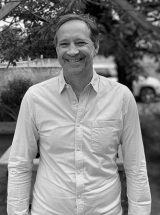
Secretary General
Dr David Fernández-Ordóñez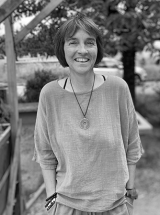
Account and Administration Specialist
Ms. Daniele Saugy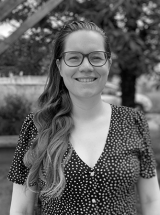
Communications and Events Specialist
Ms. Marie Reymond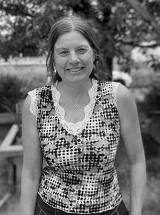
Web Development and Publications Specialist
Ms. Corinne Bottollier Dépois-
fib Secretary General
fib Communications & Events Specialist
fib Web Development & Publications Specialist
General assembly
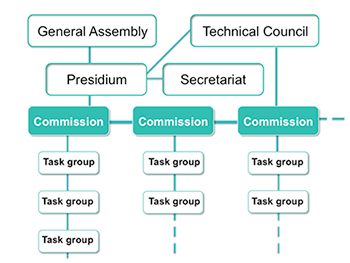 The fib general assembly (GA) consists of the heads of delegation (one per country) and the additional delegates (or their deputies) as appointed by the national groups. The number of delegates, and accordingly, the number of votes, for each national group is determined by the chosen subscription level.
fib members can find the current list of national groups and their respective delegates and deputies if they logged in the fib members' section of the website.
The GA meets at least once every two years and is the overriding authority of the association. It is therefore responsible for approving:
- amendments to the statutes;
- resolutions and technical conclusions, including the fib Model Code;
- voting rights of national groups;
- operating budget, accounting, membership subscriptions and other financial matters; and
- honorary members and honorary presidents
In addition, the GA elects the following members of the presidium:
- President and Deputy-President
- Honorary Treasurer
- Four elected presidium members (for a four-year term)
First name Last name Country Affiliation Milan Kalny Czech Republic Pontex Ltd. Andrew Truby United Kingdom Truby Stevenson Ltd Roland Fox Luxembourg Admin. Ponts et Chaussées Julio Timerman Brazil IBRACON /ENGETI Avraham Dancygier Israel Technion-Israel Institute of Technology Congzhen Xiao China China Acad. Building Res. Gennadiy G. Farenyuk Ukraine NIISK - Research Inst. Building Constr. Jiri Kolisko Czech Republic Czech Technical University in Prague Alejandro Pérez Caldentey Spain FHECOR Ingenieros Consultores/Universidad Politécnica de Madrid Hasan Ali Karahan Turkey ITU - Istanbul Technical University, Rectorate Stathis Bousias Greece - David Fernández-Ordóñez Switzerland fib Jan Vítek Czech Republic Metrostav a. s. Elisabeth Hierlein Germany FDB - Fachvereinigung Deutscher Betonfertigteilbau e.V. Udo Wiens Germany DAfStb - Deutscher Ausschuss für Hans Rudolf Ganz Switzerland Ganz Consulting Stef Maas Belgium FEBE György L. Balázs Hungary Budapest Univ. of Techn. & Economics Konrad Bergmeister Austria Univ. Bodenkultur Christis Chrysostomou Cyprus Cyprus University of Technology Wit Derkowski Poland PK Krakow Technical University Iria Doniak Brazil ABCIC Brett Pielstick United States Eisman & Russo Alper Ilki Turkey ITU - Istanbul Technical University Akio Kasuga Japan School of Engineering Yurii Kalyukh Ukraine NIISK - Research Inst of Building Constr. Jože Lopatič Slovenia University of Ljubljana Giuseppe Mancini Italy Politecnico Torino Marco Menegotto Italy Private Frank Papworth Australia BCRC Larbi Sennour United States The Consulting Engineers Gr., Inc. Dabin Feng China China Acad. Building Res. Thanasis Triantafillou Greece University of Patras Christian Cremona France Bouygues Construction Sherif Yehia United Arab Emirates Prof. Owen Brooker United Kingdom Structronix Ltd Edoardo Cosenza Italy Univ. of Napoli Federico II George Cremasco Australia Westkon Precast Concrete Pty. Ltd Carola K. Edvardsen Denmark Cowi AS Paul Gauvreau Canada University of Toronto Johan Silfwerbrand Sweden KTH Royal Institute of Technology Kim Johansson Finland Concrete Assoc. of Finland Walter Kaufmann Switzerland ETH Zürich Josef Knitl Germany Max Bögl GmbH Tamás Kovacs Hungary Budapest Univ. Technology Itai Leviathan Israel Leviathan Engineers János Magyar Hungary A-HID Epito Zartköruen Mukodo Reszvénytarsasag Viktor Markelj Slovenia Ponting d.o.o. Lars Meyer Germany Deutscher Beton- und Bautechnik-Verein Michael Pauser Austria ÖBV Andrea Prota Italy Universita di Napoli Federico II Robert Vollum United Kingdom Imperial College London Anna Saetta Italy Università Iuav di Venezia Dan Georgescu Romania Techn. Univ. of Civil Engineering Nadarajah Surendran United Kingdom PRAETER Engineering Ltd Kjell Fosså Norway Kvaerner Concrete Solutions Christian Schang France SNCF RESEAU Anna Halicka Poland Lublin University of Technology Antonio Occhiuzzi Italy Istituto per le tecnologie della costruzione consiglio nazionale delle Larry Krauser United States General Technologies, Inc. Minehiro Nishiyama Japan Kyoto University Rayed Al Arashi United Arab Emirates Goverment of Dubai Harald Müller Germany SMP Ingenieure im Bauwesen GmbH Petr Hajek Czech Republic Czech Technical University in Prague Fernando Stucchi Brazil ABECE/EGT Giovanni Plizzari Italy University of Brescia Stephen Foster Australia UNSW Sydney Johann Kollegger Austria Vienna University of Technology Sung-Gul Hong Korea, Republic of Seoul National University Linh Hoang Denmark Danmarks Tekniske Universitet Xilin Lu China Tongji University Gregg A. Freeby United States ASBI (American Segmental Bridge Institute) Janne Kihula Finland Finnish Concrete Industry Association Denis Mitchell Canada McGill Univ. Montreal Robby Caspeele Belgium Ghent University Odinir Klein Júnior Brazil França e Associados Dmitry Kuzevanov Russian Federation NIIZHB Mikael Hallgren Sweden Tyréns Sverige AB Peter Paulik Slovakia Slovak University of Technology in Bratislava Eduardo Julio Portugal Instituto Superior Tecnico, Universidade de Lisboa Marco di Prisco Italy Politecnico di Milano Chris Hendy United Kingdom Atkins Vyatcheslav Falikman Russian Federation Russian Structural Concrete Association Tor Martius-Hammer Norway SINTEF AS Alejandro Mateos Argentina National University of Northwest of Buenos Aires - UNNOBA Wayne Kassian Canada Kassian Dyck Associates Takumi Shimomura Japan Nagaoka Univ. of Technology Agnieszka Bigaj-van Vliet Netherlands TNO - Buildings, Infrastructures and Maritime Mario Pimentel Portugal Faculty of Engineering of University of Porto Martin Moravcik Slovakia SNK fib Luc Taerwe Belgium Ghent University Wim Jansze Netherlands Consolis Renata Kotynia Poland Lodz University of Technology Thierry Delemont Switzerland T-ingenierie SA Andreas Sjaastad Norway Veidekke Entreprenør AS Arianna Minoretti Norway Statens vegvesen Moustafa Al-Ani New Zealand - Sándor Sólyom Hungary Budapest Univ. of Techn. & Economics Jean Michel Torrenti France Univ Gustave Eiffel Sylvia Kessler Germany Helmut-Schmidt-University/ University of the Federal Armed Forces Hamburg Jongkwon Choi Korea, Republic of Hongik University Reggie H. Holt United States Federal Highway Administration Benjamin Graybeal United States Federal Highway Administration Tetsuya Ishida Japan Department of Civil Engineering Lionel Linger France Vinci Construction Grand Projets Tim Christle United States PTI - Post-Tensioning Institute Ólafur Haraldsson Iceland Icelandic Road and Coastal Administration Alok Bhowmick India B&S Engineering Consultants PVT.Ltd Anssi Laaksonen Finland Tampere University of Technology Auli Lastunen Finland - Fatma Mohamed Tanzania, United Republic of University of Dar Es Salaam Lwitiko Kalenga Tanzania, United Republic of University of Dar es Salaam Sisir Banerjee India The Institution of Engineers Marcin Górski Poland Silesian University of Technology Alberto Meda Italy University of Rome “Tor Vergata” Steve Denton United Kingdom WSP Alfred Strauss Austria BOKU University Giuseppe Loporcaro New Zealand University of Canterbury Chikako Fujiyama Japan Yokohama National University Corin Walford United Kingdom - Takafumi Noguchi Japan The University of Tokyo Sarah Skorpen South Africa University of Pretoria Josée Bastien Canada University Laval Véronique Bouteiller France University Gustave Eiffel Jonathan Mai-Nhu France CERIB José Manuel de Sena Cruz Portugal University of Minho Ana Sofia Louro Portugal LNEC Hans-Dieter Beushausen South Africa University of Cape Town Henrik Brøner Jørgensen Denmark University of Southern Denmark Alireza Khaloo Iran, Islamic Republic of Sharif University of Technology Arash Zolfagharnasab Iran, Islamic Republic of Paya Concrete and Cement Research Center Patrick Huber Austria Vienna University of Technology Steffen Marx Germany Technische Universität Dresden Peter Mark Germany Ruhr-Universität Bochum Nicholas Kyriakides Cyprus Cyprus University of Technology Bin Zhao China Tongji University Venkataramana Heggade India Indian National Academy of Engineers Þorbjörg Hólmgeirsdóttir Iceland The Icelandic Concrete Association Manish Mahendra Kothari India The Institution of Engineers (India) José Manuel Simon-Talero Munoz Spain Torroja Ingenieria Héctor Bernardo Gutiérrez Spain Pontem Engineering Services Pilar Crespo Spain Ministerio de Transportes y Movilidad Sostenible Julio Sánchez Delgado Spain fhecor Albert De la Fuente Spain Universitat Politècnica de Catalunya Amy Trygestad United States Precast/Prestressed Concrete Institute Frederik Autrup Denmark - Valeriu Stoian Romania - Aurelio Muttoni Switzerland École polytechnique fédérale de Lausanne (EPF Lausanne) Gerrie Dieteren Netherlands TNO Yuguang Yang Netherlands TU Delft Rob Vergoossen Netherlands Haskoning Petra Van Itterbeeck Belgium WTCB-CSTC-BBRI Roman Wan-Wendner Belgium Ghent University Tohru Makita Japan Central Nippon Expressway Company Limited Tomohiro Miki Japan - Technical council
The fib technical council (TC) consists of the heads of delegation of the national groups, commission chairs, presidium members, honorary presidents, the secretary general and additional members appointed by the presidium for a four-year term.
fib members can find the current list of TC members in when they are logged in the fib members section of the website.
The TC meets at least once per year and is responsible for initiating commissions and task groups, approving their terms of reference and appointing their chairs and conveners, respectively. The TC monitors the work of all the commissions and approves all recommendations, guides and manuals for publication.
The TC also makes recommendations to the presidium regarding:
- the dissemination of the results (in the form of bulletins, for example); and
- the need to put forth technical resolutions to be approved by the GA.
First name Last name Country Affiliation Iria Doniak Brazil ABCIC Hans Rudolf Ganz Switzerland Ganz Consulting Jim Forbes Australia Arcadis Gordon Clark United Kingdom Consultant Larbi Sennour United States The Consulting Engineers Gr., Inc. Avraham Dancygier Israel Technion-Israel Institute of Technology Roland Fox Luxembourg Admin. Ponts et Chaussées David Fernández-Ordóñez Switzerland fib Steinar Helland Norway S Helland Konsult Johan Silfwerbrand Sweden KTH Royal Institute of Technology György L. Balázs Hungary Budapest Univ. of Techn. & Economics Jean Michel Torrenti France Univ Gustave Eiffel Konrad Bergmeister Austria Univ. Bodenkultur Christis Chrysostomou Cyprus Cyprus University of Technology Wit Derkowski Poland PK Krakow Technical University Alper Ilki Turkey ITU - Istanbul Technical University Akio Kasuga Japan School of Engineering Gennadiy G. Farenyuk Ukraine NIISK - Research Inst. Building Constr. Jože Lopatič Slovenia University of Ljubljana Giuseppe Mancini Italy Politecnico Torino Marco Menegotto Italy Private Maria Rosaria Pecce Italy University of Naples Federico II Thanasis Triantafillou Greece University of Patras Rayed Al Arashi United Arab Emirates Goverment of Dubai Harald Müller Germany SMP Ingenieure im Bauwesen GmbH Michel Virlogeux France Virlogeux Consulting Tamon Ueda China Shenzhen University Fernando Stucchi Brazil ABECE/EGT Stephen Foster Australia UNSW Sydney Sung-Gul Hong Korea, Republic of Seoul National University Rolf Eligehausen Germany IWB, Universität Stuttgart Robby Caspeele Belgium Ghent University Peter Paulik Slovakia Slovak University of Technology in Bratislava Eduardo Julio Portugal Instituto Superior Tecnico, Universidade de Lisboa Marco di Prisco Italy Politecnico di Milano Chris Hendy United Kingdom Atkins Vyatcheslav Falikman Russian Federation Russian Structural Concrete Association Tor Martius-Hammer Norway SINTEF AS Michael Fardis Greece University of Patras Alberto Meda Italy University of Rome “Tor Vergata” Alfred Strauss Austria BOKU University Luc Taerwe Belgium Ghent University Xilin Lu China Tongji University Antonio Caballero Switzerland Consultant Wayne Kassian Canada Kassian Dyck Associates José Campos e Matos Portugal University of Minho Thierry Delemont Switzerland T-ingenierie SA Hugo Corres Spain FHECOR Ingenieros Consultores Domenico Asprone Italy University of Naples Federico II Linh Hoang Denmark Danmarks Tekniske Universitet Sylvia Kessler Germany Helmut-Schmidt-University/ University of the Federal Armed Forces Hamburg Tetsuya Ishida Japan Department of Civil Engineering Tor Ole Olsen Norway T.O.Olsen AS Ólafur Haraldsson Iceland Icelandic Road and Coastal Administration Alok Bhowmick India B&S Engineering Consultants PVT.Ltd Moustafa Al-Ani New Zealand - Auli Lastunen Finland - Marcelo Melo Brazil Casagrande Engenharia Fatma Mohamed Tanzania, United Republic of University of Dar Es Salaam Alejandro Mateos Argentina National University of Northwest of Buenos Aires - UNNOBA Dan Georgescu Romania Techn. Univ. of Civil Engineering Steve Denton United Kingdom WSP Sarah Skorpen South Africa University of Pretoria Josée Bastien Canada University Laval Véronique Bouteiller France University Gustave Eiffel Jan Vítek Czech Republic Metrostav a. s. Alireza Khaloo Iran, Islamic Republic of Sharif University of Technology Oguzhan Bayrak United States Univ. of Texas at Austin Manish Mahendra Kothari India The Institution of Engineers (India) Petr Hajek Czech Republic Czech Technical University in Prague José Manuel Simon-Talero Munoz Spain Torroja Ingenieria Dabin Feng China China Acad. Building Res. Bin Zhao China Tongji University Gerrie Dieteren Netherlands TNO Joost Walraven Netherlands Dutch fib Delegation Aad van der Horst Netherlands - Agnieszka Bigaj-van Vliet Netherlands TNO - Buildings, Infrastructures and Maritime Presidium
The presidium consists of the president, the deputy president, the immediate past president, four elected members, two elected deputy chairs of the technical council, the secretary general (ex officio) and up to two co-opted members. The co-opted members are elected by the presidium on the recommendation of the president for the duration of his or her time in office.
The presidium meets several times per year and acts as the association’s executive committee. It is responsible for the technical promotion of structural concrete through the association’s governing bodies. In order to achieve its objectives, the presidium may delegate special tasks to ad hoc committees. The presidium is also charged with:
- selecting the venue and date of fib events (congresses, symposia, etc.);
- approving support of non-fib events;
- sets the conditions for membership and approves new members;
- grants awards, honorary memberships and medals of merit;
- appoints the secretary general and the editor-in-chief of the fib’s Structural Concrete journal; and
- issues directives and/or detailed regulations for all aspects not covered by the statutes.
President
The president is elected by the GA for two years and should already have served as deputy president for the preceding two years. Following his or her term as president, he or she will serve as the immediate past president for a further two years.
Deputy President
The deputy president is elected by the GA for two years.
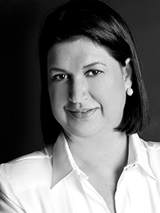
President
Iria Doniak - Brazil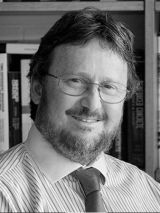
Past President
Stephen Foster - Australia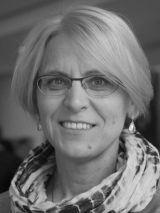
Deputy President
Agnieszka Bigaj Van Vliet - Netherlands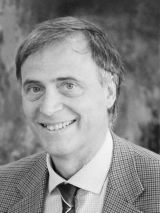
Presidium Member
Marco di Prisco - Italy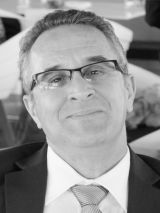
Presidium Member
Larbi Sennour - USA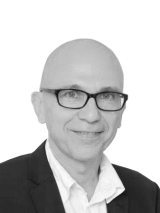
Presidium Member
Jean Michel Torrenti - France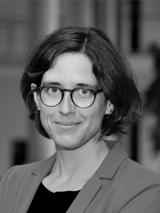
Presidium Member
Sylvia Kessler - Germany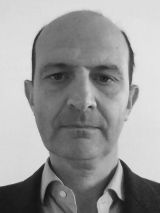
Presidium Member
Alberto Meda - Italy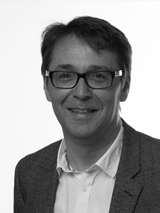
Presidium Member
Alfred Strauss - Austria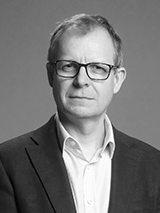
Presidium Member
Steve Denton - United Kingdom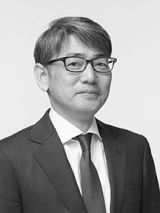
Presidium Member
Tetsuya Ishida - Japan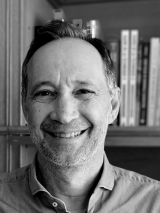
Secretary General
David Fernández-Ordóñez - Spain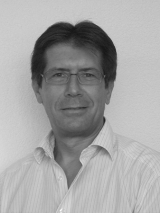
Guest
Hans Rudolf Ganz - Germany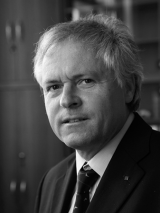
Guest
György Balázs - Hungary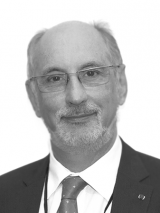
Guest
Luc Taerwe - Belgique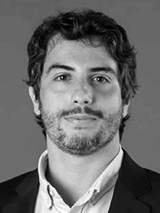
Guest
Marcelo Melo - Brazil -

fib postal address
Ch. du Barrage, Station 18CH-1015 Lausanne
Switzerland
Contact
p : +41 21 693 27 47f : +41 21 693 62 45
e : info@fib-international.org
w : www.fib-international.org

Join the fib
- Federation
- National groups
- Membership
- Commissions
- COM1: Concrete structures
- COM2: Analysis & design
- COM3: Existing concrete structures
- COM4: Concrete & concrete technology
- COM5: Reinforcements
- COM6: Prefabrication
- COM7: Sustainability
- COM8: Durability
- COM9: Dissemination of knowledge
- COM10: Model Codes
- YMG - Young Members Group
- SAG1: Sustainability
- SAG2: AI and Digitalisation
- Databases
- Publications
- Media
- Events
- News
